Health and Safety Policy for Cleaners W14
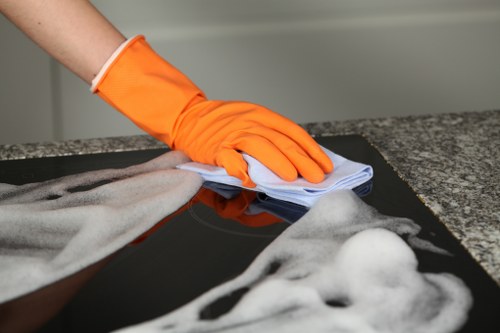 Health and safety for cleaners in W14 is a core part of delivering reliable, professional cleaning services in any workplace or residential environment. A clear policy helps reduce risk, protect staff, and support consistent standards during everyday cleaning tasks. This approach covers safe methods, careful planning, and responsible behaviour so that cleaners can work efficiently while limiting harm to themselves and others.
The aim of this policy is to create a safer working environment through practical controls and shared responsibility. Whether carrying out routine cleaning, deep cleaning, or specialist tasks, every cleaner should understand the importance of using equipment correctly, reporting hazards, and following safe procedures. A well-structured cleaning health and safety policy also supports quality service by reducing accidents, preventing damage, and improving confidence in day-to-day operations.
All cleaning activities should begin with a simple risk assessment. This means identifying possible hazards before work starts, such as wet floors, electrical equipment, sharp objects, chemicals, or blocked access routes. 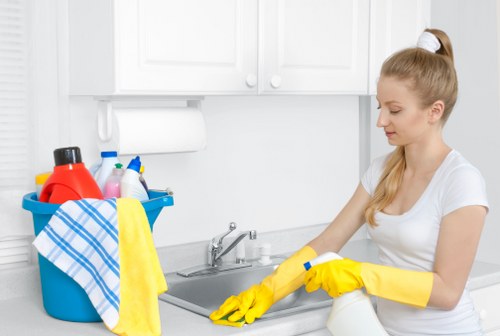 Any risk that cannot be removed immediately should be controlled using the right tools, warning signs, safe systems of work, and proper supervision where needed. By taking a proactive approach, cleaners in W14 can carry out tasks more safely and with greater consistency.
Training is essential to maintaining safe standards. Every cleaner should receive instruction on equipment use, chemical handling, manual handling, emergency procedures, and personal protective equipment. Training should be refreshed regularly so that staff remain aware of changing products, updated methods, and site-specific risks. A strong cleaning safety policy depends on cleaners knowing how to work safely, recognise hazards, and respond properly if something goes wrong.
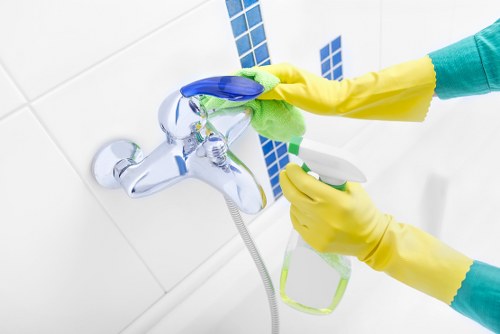
Personal protective equipment, or PPE, must be selected according to the task. This may include gloves, aprons, slip-resistant footwear, face protection, or masks where appropriate. PPE should be used correctly, kept in good condition, and replaced when damaged or worn. It is also important that cleaners understand the limits of PPE, as it supports safety but does not replace safe working practices. In a good health and safety policy for cleaners, PPE is one part of a wider prevention strategy.
 Chemical safety is another major priority. Cleaning products should always be stored securely, labelled clearly, and used according to instructions. Mixing incompatible substances can create harmful fumes or dangerous reactions, so cleaners must never combine products unless the process has been approved and trained. Appropriate ventilation should be maintained during use, and spills should be cleaned promptly with the correct method. Careful chemical control is a key feature of responsible cleaning services safety.
Manual handling procedures should be followed to prevent strain and injury. Cleaning staff often lift bins, move furniture, carry supplies, or handle equipment, so safe posture and sensible load limits matter. Where possible, heavier items should be moved using trolleys or other aids. Cleaners should bend the knees, keep loads close to the body, and avoid twisting while lifting. These simple steps support a safer and more sustainable cleaners health and safety approach.
Slip and trip hazards are among the most common risks in cleaning work. Floors may become wet during mopping, obstacles may be left in walkways, and cables or tools can create obstruction. To reduce danger, areas should be marked clearly, pathways kept tidy, and equipment stored away when not in use. Signs should be placed at the start of cleaning and removed only when the surface is dry and safe. Good housekeeping is central to safe cleaning operations and helps protect both workers and building users.
Equipment must be maintained properly to avoid faults and accidents. Vacuums, floor machines, extension leads, and other tools should be checked before use and removed from service if damaged. Cleaners should only operate equipment they have been trained to use.  Any defect, unusual noise, or performance issue should be reported immediately. Proper maintenance extends equipment life while supporting a safer cleaning policy overall.
Emergency procedures should be straightforward and easy to follow. Cleaners need to know what to do in the event of injury, fire, chemical exposure, or a major spill. This includes alerting the appropriate person, moving to a safe area if necessary, and following the site’s emergency arrangement. First aid provision, incident reporting, and isolation of hazards are all important parts of a reliable health and safety policy for cleaning staff.
Work planning also plays an important role in keeping cleaners safe. Jobs should be scheduled with realistic time allowances so that staff do not feel pressured to rush. Adequate breaks, reasonable workloads, and clear task instructions help reduce fatigue and errors. Where cleaning is carried out alone or outside normal hours, additional checks may be needed to ensure the cleaner can work safely and summon help if required. A thoughtful cleaners safety policy should reflect both the task and the working conditions.
 Finally, everyone involved in cleaning should contribute to a culture of safety by speaking up about hazards and following the agreed rules. Supervisors should review procedures regularly, act on reports promptly, and make improvements when new risks are identified. Cleaners should feel confident that safety concerns will be taken seriously. With clear expectations, sensible controls, and consistent training, a cleaning health and safety policy supports safer work, better service quality, and stronger day-to-day performance.